
Emergency Response
& Safety Solutions
Trusted by Refineries, Plants & Industrial Facilities
Our members operate across the Texas Gulf Coast and rely on RTFC for 24/7/365 emergency response, advanced training, and dependable fire protection. We work in high-risk environments where speed, precision, and preparation are critical. That’s why teams trust us to show up ready when it matters most.



A History of Excellence
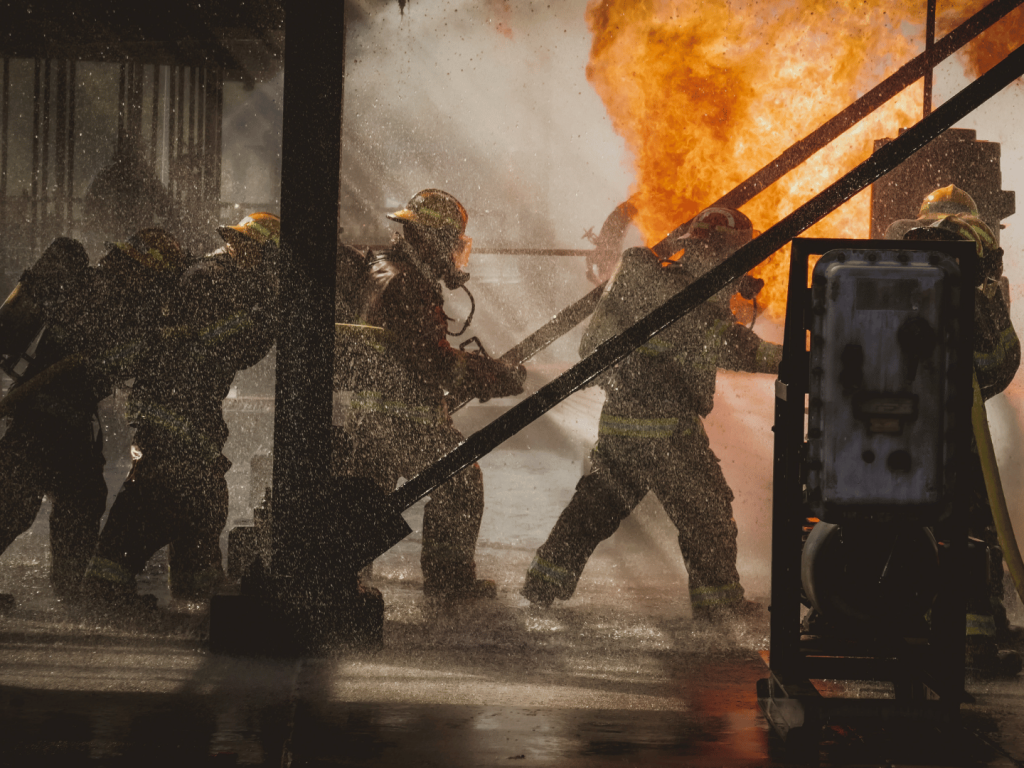
For over 75 years, RTFC has built a reputation on discipline, preparedness, and execution in high-risk industrial environments. Our teams train to perform under pressure, using proven tactics and real-world scenarios that reflect the conditions they face on the job. This is a standard shaped by experience, that is upheld every time we repsond.
How We Serve Our Members
We support industrial operations with integrated fire protection, emergency response, and training programs designed for high-risk environments. From in-plant staffing to specialized response capabilities, our services are built to meet complex operational demands and evolving regulatory standards.
In-Plant Staffing
Full-time emergency response teams embedded directly within member facilities to provide immediate protection and compliance support.
Emergency Response
Dedicated teams and specialized instruction for LNG export terminals to maintain PHMSA-level compliance and preparedness.
RTFC’s Service Offerings
In-Plant Fire Protection & Safety Staffing
Refinery Terminal Fire Company (RTFC) provides industrial fire suppression and emergency response services on a 24/7/365 basis, staffed on a traditional firehouse schedule (24 hours on / 48 hours off) with on-call callback capability.
Core Operations
RTFC serves as the primary emergency response provider for all on-site incidents at industrial facilities — refineries, tank storage areas, and operating units. Beyond active emergency response, on-duty personnel carry out a robust schedule of preventive maintenance, inspections, and testing throughout their shifts.
Inspection & Maintenance Services
Personnel conduct routine inspections and testing across a broad range of fire and safety systems, including fire hydrants, detection/alarm systems, extinguishing agent systems, emergency lighting, fire extinguishers, foam systems, fire pumps, SCBAs, deluge systems, eyewash/safety showers, fire doors, Halon/dry chemical systems, and Level A Haz-Mat suits. Frequencies range from daily and weekly checks to monthly, quarterly, bi-annual, and annual testing cycles.
Support & Training Services
Beyond emergency response, RTFC supports plant turnarounds, Process Hazard Reviews (PHRs), Process Change Authorizations (PCAs), and incident investigations. They also provide training services including EMT/First Responder CEU instruction, fire extinguisher training, respirator fit testing, air monitoring, confined space pre-planning, and emergency response drills.
Personnel Qualifications
All RTFC members must meet a comprehensive set of certifications, including Industrial Firefighting, Incident Command, Hazardous Material Response, Industrial/Confined Space Rescue (minimum 80 hours), CDL licensure, and Emergency Medical Attendant credentials, among others.
Emergency Response
RTFC extends its emergency response capability beyond industrial plants to cover the Port of Corpus Christi Authority, responding to incidents on vessels, docks, and ship channel facilities. RTFC operates both a Firefighting Barge (8,000 GPM pump capacity, 15,000 gallons of foam concentrate) and a Fireboat (4,000 GPM, 1,000 gallons of foam), which was notably deployed during the 2017 Port Aransas barge explosion. Both vessels are also rescue-capable.
Firefighter Training & Certification
RTFC’s Training Academy opened in 1994 as a $7 million cooperative project funded by its largest member companies, purpose-built by and for the refining and petrochemical industry. The campus sits on approximately nine acres and features live fire props, hazmat training equipment, rescue training props, a 220,000-gallon water tank with dual 3,000 GPM fire pumps, fuel storage for training scenarios, and a 250,000-gallon wastewater treatment plant for environmental compliance. Classrooms accommodate up to 100 students with full A/V capabilities, and an on-site medical clinic staffed by a certified EMS member supports training operations.
Reach & Scale
RTFC trains clients from across the U.S. and internationally — including Canada, Mexico, Malaysia, Venezuela, Brazil, Africa, and Saudi Arabia — logging over 150,000 training hours in the past five years alone.
Instructors
All RTFC instructors are active career firefighters, meaning they bring real-world, current operational experience into the classroom. The academy supplements its core staff with adjunct expert instructors from the U.S. and United Kingdom. Courses are custom-tailored to each client’s specific facility hazards and training needs.
Course Offerings
We deliver training across four primary disciplines. Industrial/Process Unit Firefighting covers live LPG, propane, and flammable liquid fires with both offensive and defensive tactics, including daylight and nighttime scenarios. Marine Firefighting addresses vessel and facility emergencies using a $500,000 prop with LPG and flammable liquid fire capabilities. Structural Firefighting covers interior and exterior attacks, ladder operations, ventilation, occupant search, and Rapid Intervention Training (RIT). High Angle and Confined Space Rescue trains responders in rope systems, rigging, patient access, and extrication. Finally, Hazardous Materials training is aligned to 29 CFR 1910.120 and NFPA 472 standards at the HAZWOPER, First Responder, Technician, and Refresher levels — covering hazard survey, harm estimation, decontamination, and source control. Emergency Medical Training is also available, delivered by Texas Department of Health EMT-B or Paramedic certified instructors.
LNG Safety & Compliance
RTFC provides fully staffed, 24/7 fire and emergency response teams embedded directly within two U.S. Gulf Coast LNG export terminals. Beyond active emergency response, these teams maintain continuous readiness through inspection, testing, and maintenance of nearly two dozen categories of emergency response equipment — which also helps offset a portion of the overall cost of maintaining the team.
LNG Response Training for Fire Brigade Members
RTFC offers specialized training programs for a client company’s own fire brigade personnel, focused specifically on LNG emergency response competency. The curriculum covers LNG characteristics and properties, live-spill training, and live-fire training — ensuring personnel are prepared for the unique hazards that LNG facilities present.
Fire Drill & Emergency Preparedness Consulting for LNG Peak Shavers
RTFC assists LNG peak shaver facilities in meeting the emergency preparedness and fire drill requirements mandated under 49 CFR Part 193 (PHMSA LNG regulations). Services include coordinating outreach with local emergency responders, training plant personnel, and directly overseeing and executing hands-on fire and evacuation drills at the facility.
Taken together, RTFC positions itself as a full-service LNG emergency management partner — capable of providing embedded staffing, specialized training, and regulatory compliance support across the LNG sector.
What Our Members Say

Partner With Refinery Terminal Fire Company
The nation’s leader in industrial emergency response and firefighter training.